Class of 2027 Community Service Day Sponsored by SRP and AU
The Class of 2027 began the year with Community Service Day and while topics were heavy and showed the need throughout our community and neighboring counties, it served a more than valuable purpose to ground us as leaders. To make a change for the future, a transparent view must be understood from the present. We began the day gathered in the Child Enrichment classroom space to learn about three non-profit organizations who all serve a unique population in the Augusta area.
First, our fantastic day chair, Brittany Burnett, President & CEO of United Way of the CSRA, shared about the state of ALICE in Georgia as a whole and then zoomed in on Richmond and Columbia Counties. “What is ALICE?” was a common question among the class. Brittany explained it as Asset Limited, Income Constrained, Employed. This specific population lives above the Federal Poverty Level (FPL) but struggles to make ends meet. The key identifier of an ALICE family is their Household Survival Budget which is exactly what it sounds like; the minimum costs of household necessities (housing, childcare, food, transportation, health care, technology, and local taxes). The state of Georgia averages at 30% of households are at the ALICE threshold but above the FPL while 13% of the state is at or below the FPL. As Brittany brought us down into the Richmond County data, we learned that Richmond County is comprised of 32% ALICE households and 16% at or below the FPL. Additionally, we studied the numbers of Columbia County which showed ALICE households at 27% and FPL households at 8%. These numbers were heavy, but real. The data shows that reality of struggling households knows no lines, therefore, so should we.
Second, we were joined by Bernadette Kelliher, President & CEO of Augusta/CSRA Habitat for Humanity. During her portion of the morning session, a brand-new commercial was shared that outlines the person who benefits from Habitat. It can be your neighbor, coworker, healthcare professional, or child’s teacher. It was such an impactful lesson on removing our assumption of what affordable housing can be in a community that takes the time to understand Habitat gives a “hand-up” to these families, not a “hand-out” through strategic low-interest mortgage loans. The goal for Habitat is high, to go from 8 houses a year to 10 to 20 and then 50, but not unattainable. Bernadette transitioned her discussion to the impacts of leading with intention, transparency, and vision. To reach the aforementioned goals, it is vital for her team to always be communicating and move forward as a unit willing to address failure or difficulties if and when they happen. This strategy is transferable across all organizations and left quite an impact on our class.
Third, it was time to hear from our morning hosts, Child Enrichment. The Executive Director, Kari Viola-Brooke, spent her portion of the day on the mission of Child Enrichment (CE) and its service to the children of the CSRA. There are three core programs of CE; the Child Advocacy Center (CAC), the Court Appointed Special Advocate (CASA), and Prevention Services. Each program serves children of the CSRA in a specific manner. The CAC provides forensic interviews for children after an allegation of abuse or witnessing a violent crime, family advocacy to support children and their caregivers post-interview, therapy services for children who have experienced abuse, and more. In the month of August, 80 forensic interviews were administered. Next, the CASA program is nationally and state-accredited so that the best training prepares volunteers to support and serve children during court proceedings. In 2025, the program served 303 children. Court appointed CASAs are volunteers from all walks of life who work closely with the children’s care team to advocate for the child’s needs. Each year more children come into the court system, so the need for CASAs continues to grow. The last program is Prevention. As the newest program available at CE, the purpose is to provide trainings for caregivers and community members in order to prevent abuse from occurring. CE is highly motivated to share the tools for us to be the ones that stop child abuse before it can even happen. After Kari shared CE, the class toured the full facility to see where the three programs are implemented. Listening to the impacts of CE and the intentionality to support and protect children who have suffered unspeakable things is not an easy way to start the class year, but it is necessary to understand the full scope of need that must be addressed now.
Last, we ended the day at Golden Harvest Food Bank. After lunch, Amy Breitmann, President and CEO, shared the mission and impact of Golden Harvest. The non-profit is dedicated to addressing food insecurity across 24 counties in Georgia and South Carolina through the teamwork of more than 325 hunger relief partners. Each year, Golden Harvest moves 15 million meals. Amy shared that one in six people in our area experience food insecurity, which means not knowing when the next meal will come or how to afford it. Additionally, one in four children in our community struggle to get enough to eat. Current issues that the food bank is paying close attention to is the cost shift in SNAP benefits with the federal government shifting more of the cost to the states. This will impact all areas Golden Harvest serves, but the largest impact will be rural communities and grocery stores. Amy also explained that post-Helene, the food bank stepped up in numerous ways to support not just their main services areas but also the immediate surrounding communities. Now, thanks to a Feeding America grant, generators were procured to turn Golden Harvest into a full disaster response center. We concluded our day with a tour of the facility with Cheif Operations Officer, Jeff Griffis, who carefully explained each portion of the campus and the services they provide. One word Jeff really encouraged us to focus on was dignity. As a non-profit, Golden Harvest strives to provide and protect the dignity of those they serve through mindful operations that serve our neighbors in need with intentionality. After concluding our tour, Stephen King, External Affairs Manager - East Region for Georgia Power Company, wrapped up the day by encouraging the entire class on how to develop service engagement within our organizations. For those in the class that are not in the non-profit space, this really drove home the impact we have on those around us both professionally and personally. Stephen artfully connected each non-profit that was presented to the class in a way that conveyed a sense of action among us.
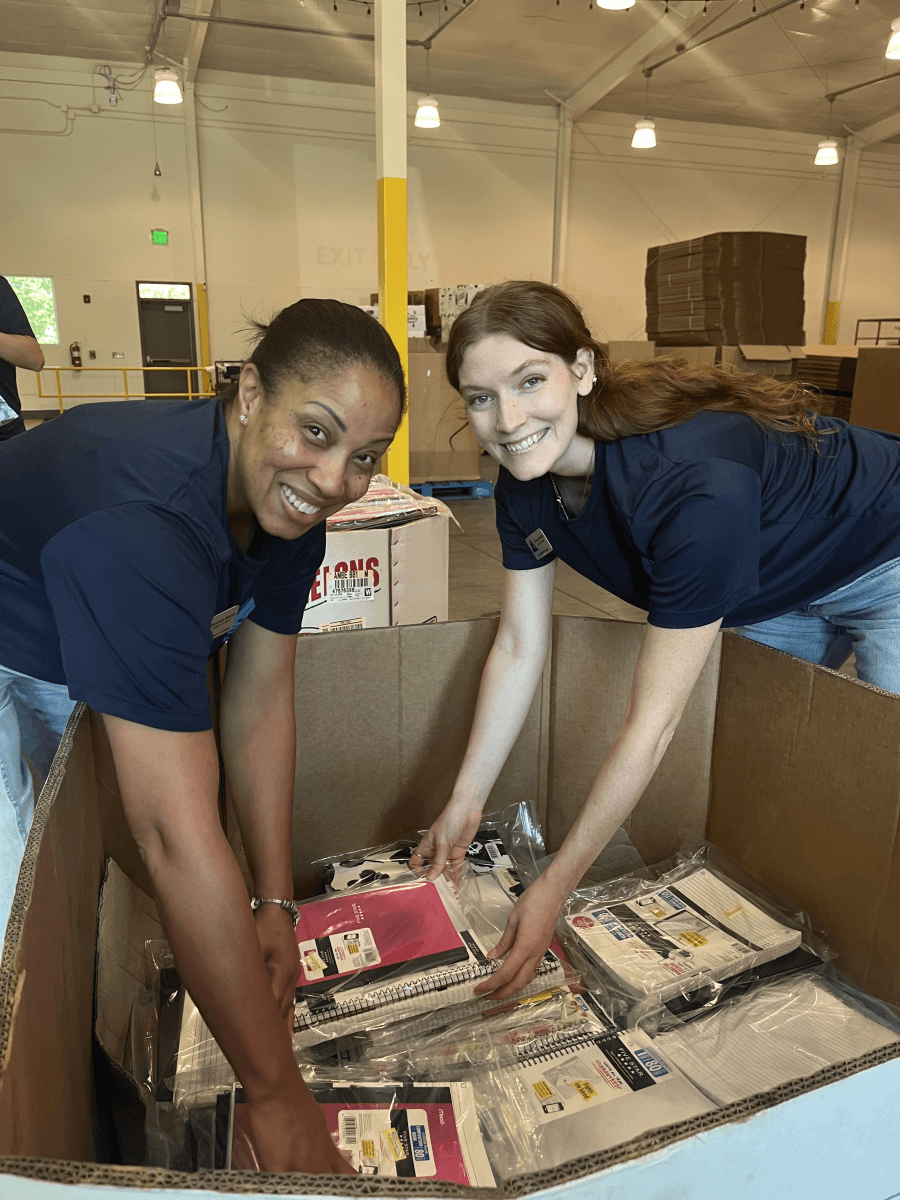
Community Service Day was the perfect program to start the year for the Class of 2027. Our day chair, Brittany Burnett, chair, Taylor Lamb, and co-chair, Kaylee Snead, built a day where we not only heard the reality of need in our community but also participated in making a difference. Throughout the day, the entire class did two service projects; snack bag building at Child Enrichment and produce and school supplies sorting at Golden Harvest. Listening to the needs of these non-profits is one thing, but taking time out of our programming to get to work and participate in making a difference really brought home the value of what we are here to do in Leadership Augusta: to build a stronger community.
Written by Grace Welsh, Class of 2027
Thank you to our Presenting Sponsor, SRP Federal Credit Union and our Program Partner, Augusta University, for their continued partnership and commitment to developing community leaders.